

Discomfort is what you push through. Pain is what you stop for. That’s the short answer, and it’s the core of pain vs discomfort when talking about running.
Your legs are burning at mile 10. Your lungs feel tight. Your brain is shouting that you should stop. The hard question is whether that signal means you’re getting stronger or getting hurt. Learning to tell them apart is one of the most useful skills an endurance runner can have, and it’s one I wish I had learned sooner.
New here, or missed last week’s episode? Start with my last episode post, then come back to this one.
I’m Gerald Collins, founder of RunRev Coaching. I’m a faith-aligned running coach, I hold RRCA Level I and 80/20 Endurance coaching certifications, and I’ve run five marathons. I’ve coached runners since January 2023, and I’ve had to learn this lesson in my own body.
In this post, you’ll learn what discomfort feels like, what real pain feels like, and a few questions to ask yourself in the moment. I’ll also share my own race from a few years ago, when my body showed me what pain feels like.
What Discomfort Feels Like
Discomfort is part of endurance training. Heavy breathing on a hill, burning legs in the last mile of a 5K, and general soreness after a long run all belong here. It’s spread across your body, and it usually eases when you slow down or stop. It just doesn’t feel good.
Discomfort is what you push through.
You learn what discomfort feels like through time on your feet. Speed work and hard efforts stretch you. That stretch is where growth happens. The more familiar discomfort becomes, the easier it is to notice when something is different. Consistency builds that familiarity. If you’re still building it, read why running plans fail beginners. If you aren’t being consistent, you can’t learn to appreciate and understand discomfort.
What Pain Feels Like
Pain is different. It’s specific, so you can point to exactly where it is. It’s intense. It’s happening right now, and it doesn’t go away just because you stop. It can cause lasting harm. A few examples follow.
- A foot that may be broken, where you can’t keep weight on it
- A shooting pain in one muscle that wasn’t there before
- Chest pain in the middle of your chest, or breathing that feels impossible
A bee sting is a good picture of it. You know exactly where it hurts. As I tell my athletes, “Discomfort you push through. Pain is a no go.”
Pain means you stop.
My Germantown 8K Story
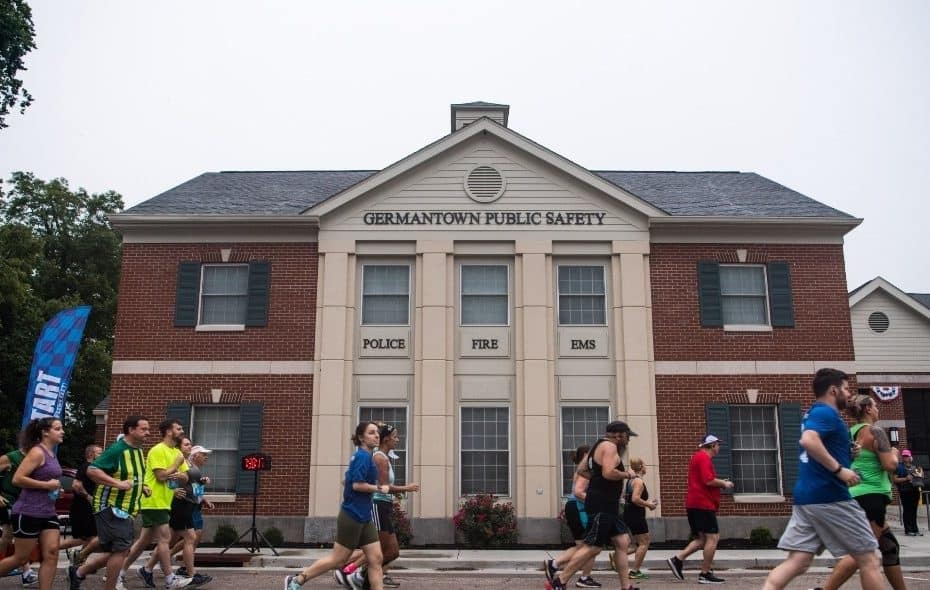
In 2024, I ran the Germantown 8K. About one to two miles in, I started having pain. It wasn’t enough to make me stop on the course, but my knee buckled. It was more than discomfort. It was real pain, and I knew it needed to be checked.
I saw a doctor, and what they found was not what I expected. I had skipped strength training for a long stretch. Over time, my hip muscles got weak, and that forced the muscles that support my knee to overcompensate. The knee muscles got overworked and worn out, and eventually they could no longer support the running.
The lesson was simple. Running alone doesn’t build the strength your joints need. The strength work you skip now is the bill you pay later.
How to Tell Them Apart
When you’re mid-run and unsure, ask yourself these questions.
- Where is it? Discomfort spreads across your body. Pain is usually in one specific spot.
- Is it on both sides? Aches in both legs usually point to general soreness. Pain on both sides is most likely general muscle soreness, according to Summit Orthopedics.
- Is it changing how you move? Limping, favoring one side, or suddenly stopping is a stop signal. Discomfort that makes you limp or favor one side is a warning sign.
- Is it getting worse? Mild aches that fade within a day or two are usually fine. Pain that builds over weeks needs attention, and it may mean your plan needs changing. A training plan that fits your life can build in the recovery you need.
- Could it be serious? If you can’t breathe, have chest pain, or feel you might be badly hurt, stop and get help right away.
University Hospitals makes the same point: you need to tell injury pain apart from the achy, stiff feeling of muscle soreness. If you’re unsure, a medical professional who knows running is the right person to ask.
Pain Is Not Only Physical
The same rule applies beyond the road. Stepping outside your comfort zone is how you grow, whether that’s meeting new people or trying something new. But if someone is hurting you emotionally, physically, or spiritually, that’s pain too. Stop, and get help. I’ve written about the emotional side of running before in how running changed my mental health.
You don’t have to face pain alone. Reach out to someone you trust or a qualified professional.
Final Thoughts
You’re not lazy, and you’re not broken. You’re learning to listen to your body, and that’s a skill worth building.
If you want help in building a plan or discovering how I can support you, book your free discovery call.
Want to keep going? Read about why runners need community when life gets heavy, then check out you don’t have to earn the title runner.
I coach runners in Dayton, Cincinnati, and online.
Stronger than the struggle.
Listen to this episode on Spotify.